8 Signs You May Have Insulin Resistance Before Diagnosis
Key Highlights
Insulin resistance can raise diabetes risk long before a formal diagnosis appears.
Early detection matters because changes in blood sugar levels may start quietly.
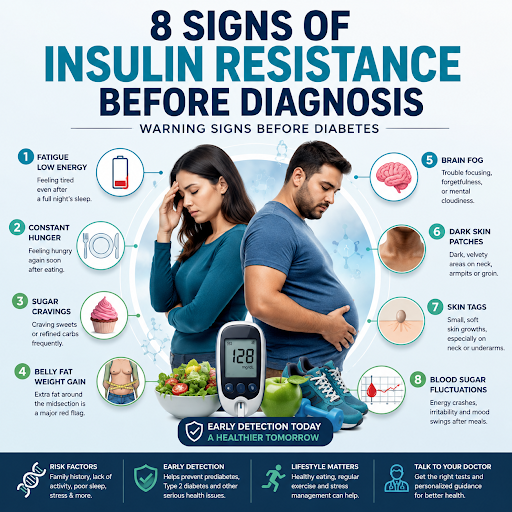
Common symptoms of insulin resistance may include fatigue, unusual hunger, sugar cravings, and skin changes.
Weight gain around the midsection can be another overlooked clue.
Family history, low physical activity, and chronic stress may raise your risk.
Proactive steps like tracking patterns and seeing a healthcare provider can help
Insulin resistance often builds slowly, which is why many people miss the warning signs.
Your blood sugar levels may still look normal for a while because your body makes extra insulin to keep up. Even so, certain changes in energy, appetite, skin, or body weight can point to a growing problem. Knowing what to watch for can support early detection and help you lower diabetes risk before insulin resistance progresses into prediabetes orType 2 diabetes.
Insulin resistance happens when your muscles, fat, and liver do not respond to insulin as they should.
This lowers insulin sensitivity and makes it harder for your body to move glucose from your blood into your cells for energy.
At first, your pancreas may make enough insulin to keep blood sugar levels in range, so you may not notice clear symptoms. Over time, this can become a chronic condition that affects body weight, energy use, and long-term metabolic health.
Your body needs insulin to move blood glucose into cells, where it can be used for energy.
With insulin resistance, that process becomes less effective. As a result, blood sugar can start to build up, and your pancreas responds by making more insulin. Those rising insulin levels may keep things balanced for a while, but they also signal that your body is working harder than it should.
Why does that matter to you?
Because insulin resistance can come before prediabetes and Type 2 diabetes. Common early signs that may indicate insulin resistance before an official diagnosis include fatigue, increased hunger, sugar cravings, skin tags, dark patches of skin, and weight changes.
Prediabetes is different because it means blood glucose is already higher than normal.
Insulin resistance may exist before that stage and often causes few or no symptoms at all.
It is easy to confuse insulin resistance with prediabetes, but they are not the same. Insulin resistance describes how your cells respond poorly to insulin. Prediabetes means your blood sugar levels are already above the normal range, even if they are not yet high enough for a diabetes diagnosis.
In real life, this means insulin resistance may be present without obvious symptoms. Your pancreas can sometimes make enough insulin to keep glucose under control for a period of time. Prediabetes can also be quiet, though some people notice darkened skin, skin tags, or other signs linked with rising blood sugar levels.
A healthcare provider may use blood work to sort this out.
Tests can include fasting glucose,A1c, and sometimes an oral glucose tolerance test, depending on the situation.
In the United States, insulin resistance can affect anyone. You do not need to have diabetes to develop it, and it may be temporary or long term. That is why knowing the main risk factors matters.
Some people are at high risk because of body weight, especially excess fat around the belly, but that is not the full picture. Age over 45, family history, low physical activity, smoking, sleep apnea, high blood pressure, high cholesterol, and certain health conditions can all raise your chances.
Many people assume insulin resistance only affects someone with obesity or diagnosed diabetes. That is not true. You may face a higher risk even without diabetes if other risk factors are present. A strong family history, limited physical activity, and certain medical conditions can all matter.
Some of the more overlooked risk factors include:
A family history of diabetes, prediabetes, or insulin resistance
Sedentary habits and too little regular physical activity
Sleep problems such as sleep apnea
Smoking and long-term chronic stress
A history of gestational diabetes or heart disease
This matters because early lifestyle changes can help improve insulin sensitivity.
If you recognize more than one of these patterns in your own life, it may be worth taking proactive steps and discussing your concerns with a healthcare provider.
Genetics can shape your risk of insulin resistance, even before lifestyle enters the picture.
If you have a family history of diabetes, prediabetes, or related conditions, your odds may be higher. Some inherited disorders are also linked to insulin resistance, though they are rare. Still, genetics is only part of the story. Lifestyle choices influence how strongly that risk shows up over time. Low movement, highly processed foods, excess body weight, and poor sleep can all push the body toward lower insulin sensitivity. Chronic stress may also make the situation worse. When these factors cluster together, they can connect with metabolic syndrome and a higher chance of heart disease and Type 2 diabetes. So yes, you can be more at risk even if you do not already have diabetes.
One challenge with insulin resistance is that the early signs are often subtle.
You may not feel sick, and your blood sugar may stay in range for a while because your body is making extra insulin. That is why early detection depends on noticing patterns. Symptoms of insulin resistance can include energy crashes, unusual hunger, sugar cravings, and gradual weight changes. In some people, blood sugar spikes and later drops may affect mood, appetite, and focus before consistently high blood sugar levels appear.
Fatigue is one of the most common changes people notice, but it is easy to brush off.
If your cells are not using glucose well, your body may struggle to produce steady energy. That can leave you feeling worn out even after a full night of sleep.
Mood can shift too. Blood sugar swings may leave you feeling irritable, foggy, or low between meals. These are subtle symptoms of insulin resistance that people often overlook because they can seem like stress, lack of sleep, or a busy schedule.
Watch for patterns such as:
Feeling tired soon after eating
Midday crashes in energy
Irritability when meals are delayed
Trouble concentrating during the day
yes, there can be a connection between sugar cravings and early insulin resistance. When insulin sensitivity drops, your body may have a harder time keeping blood sugar levels steady. After a high-carb meal, blood sugar can rise quickly and then fall, leaving you hungry again sooner than expected. You might notice that you crave sweets, snack often, or feel unsatisfied even after eating. That does not automatically mean you have insulin resistance, but repeated hunger and cravings can fit the pattern. In some cases, this cycle may also support gradual weight gain over time.
Pay attention to when cravings hit. If they show up after sugary drinks, processed carbs, or long gaps between meals, your body may be signaling unstable blood sugar control. That makes this an important sign to discuss with your healthcare provider.
Not every clue is about how you feel. Sometimes insulin resistance shows up through physical symptoms that you can see on your body or notice in how your clothes fit. For many people, weight gain around the waist is one of the clearest signs. Extra body fat in the belly area is strongly linked to lower insulin sensitivity. Skin changes can also appear, especially as insulin resistance moves closer to prediabetes. These signs can help you know when it is time to take a closer look.
Certain skin changes can be a sign of developing insulin resistance. One well-known example is acanthosis nigricans, which causes darkened, often velvety patches of skin. These areas may appear on the neck, underarms, groin, or other skin folds. Skin tags can also show up more often in some people with insulin resistance. These changes do not confirm a diagnosis on their own, but they can be important warning signs, especially when paired with other symptoms tied with blood sugar problems.
Look for signs such as:
Dark patches on the back or sides of the neck
Discoloration in the armpits or groin
New or increasing skin tags
If you notice these skin changes, it is a good idea to bring them up with your healthcare provider. They may be one of the clearest visible clues that your body is under metabolic strain.
Weight changes can be frustrating when insulin resistance is part of the picture.
Many people notice weight gain around the midsection, and that extra belly fat is a major risk factor. You may also find that losing body weight feels harder than expected, even with steady effort. That said, insulin resistance is not limited to people who are overweight. Yes, you can develop insulin resistance even if you have a healthy weight. Family history, low physical activity, certain medications, hormone disorders, sleep problems, and genetics can still play a role.
That said, insulin resistance is not limited to people who are overweight. Yes, you can develop insulin resistance even if you have a healthy weight. Family history, low physical activity, certain medications, hormone disorders, sleep problems, and genetics can still play a role.
In later stages, when blood sugar rises more clearly, some people may even have unexplained weight loss. So if your weight is changing without a clear reason, or your body seems to respond differently than before, that subtle shift is worth paying attention to.
At-home checks cannot diagnose insulin resistance, but they may help you spot patterns sooner.
That can support early detection, especially if you already have several risk factors. You can pay attention to signs such as repeated hunger, fatigue after meals, visible skin changes, and waist size over time. Some people also monitor blood sugar or blood glucose levels at home to notice trends. These simple observations can give you useful information to share with a healthcare provider.
If you want simple at-home checks, start with trends rather than one isolated number. You can monitor blood sugar levels if you already use a home device, and you can track waist circumference over time. Since belly fat is a major risk factor, this can be a useful clue.
It also helps to compare how you feel with what you notice physically. Do you feel tired after meals? Are cravings stronger on certain days? Those patterns matter, even before formal test results are available.
| At-Home Check | What to Notice |
|---|---|
| Blood glucose | Repeated higher-than-expected readings or large swings |
| Waist circumference | Gradual increase around the belly over time |
| Energy after meals | Sleepiness, fatigue, or mental fog after eating |
| Hunger patterns | Getting hungry again very quickly after meals |
| Skin appearance | Dark patches or more skin tags |
If you suspectinsulin resistance, your next step should be to talk with a healthcare provider.
Early detection can make a real difference, especially because insulin resistance may improve with lifestyle changes before it progresses further.
A provider may review your medical history, family history, physical exam findings, and symptoms of insulin resistance. They may also order blood tests such as fasting glucose, A1c, or a lipid panel to look at your overallmetabolic health.
Reach out if you notice:
Ongoing fatigue, unusual hunger, or sugar cravings
Dark skin patches or new skin tags
Weight gain around your belly or unexplained weight changes
A strong family history of diabetes or other major risk factors
These are practical, proactive steps. You do not need to wait for severe symptoms before asking for help.
In conclusion,
recognizing the early signs of insulin resistance is crucial for taking proactive steps toward better health. By paying attention to changes in energy levels, mood, and physical symptoms, you can be more in tune with your body's needs. It’s important to remember that lifestyle factors, including diet and exercise, can significantly impact your insulin sensitivity. If you suspect you may be experiencing these symptoms, don’t hesitate to reach out to your healthcare provider for advice and guidance. Taking charge of your health today can lead to a happier, healthier tomorrow. For personalized support, consider scheduling a consultation withMechanicMD to discuss your concerns further.
Frequently Asked Questions
Can insulin resistance happen at a healthy weight?
Yes. Insulin resistance can happen even if your body weight is in ahealthy weight range. Other risk factors include family history, low physical activity, sleep problems, smoking, certain medications, and hormone disorders. So normal body weight does not always mean normal blood sugar levels or low risk.
What should I do if I think I have insulin resistance?
Start by scheduling a visit with your healthcare provider. They can review your symptoms, risk factors, and order blood tests such as fasting glucose orA1c. Early detection matters. While you wait, focus on practical lifestyle changes like better food choices, more movement, and healthier daily habits.
Can lifestyle changes help insulin resistance?
Yes. Helpful lifestyle changes include regular physical activity, eating more whole foods like vegetables and whole grains, reducing sugary and highly processed foods, and working toward a healthy weight. Strength training and other moderate exercise can improve insulin resistance by helping your muscles use glucose more effectively.