What is a coronary calcium score? A Guide for Patients
Key Highlights
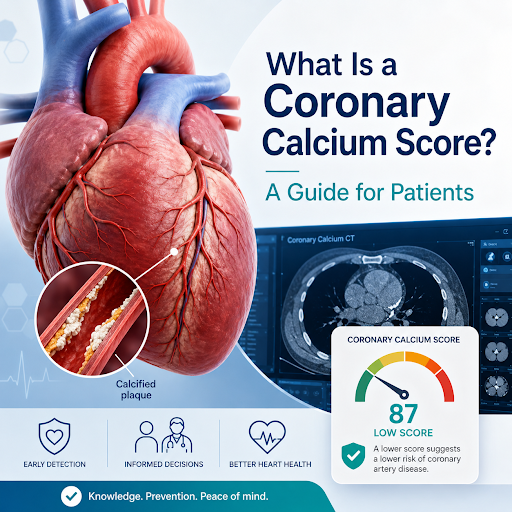
A coronary calcium score is a valuable tool for assessing heart disease risk by measuring calcium deposits in coronary arteries through a CT scan.
The score helps identify plaque buildup, offering insights into one's heart health and aiding preventive measures.
Individuals with risk factors such as family history, high cholesterol, or hypertension may consider getting a calcium score test.
The test is generally safe, with minimal radiation exposure, yet it provides reliable results in predicting heart disease risk.
Understanding your coronary calcium score can guide necessary lifestyle changes for better heart health..
Introduction
Understanding how our heart functions and the factors that contribute to its health is essential for maintaining well-being. In recent years, the coronary calcium score has emerged as a valuable tool that helps assess cardiovascular risk through a simple imaging test. This score plays a crucial role in identifying potential signs of coronary artery disease and guiding necessary lifestyle modifications. By evaluating calcium deposits in the coronary arteries, individuals can take proactive steps towards better heart health and reduce the likelihood of serious cardiovascular events.
Understanding Coronary Calcium Score
A coronary calcium score offers crucial insights into heart health by measuring the amount of calcium deposits present in the coronary arteries. This score results from a simple imaging test, specifically a CT scan, which detects calcified plaque—a waxy substance that can build up in artery walls. Understanding your calcium score is vital as it helps estimate your risk of heart disease and heart attack, prompting necessary lifestyle changes or medical interventions when needed. Knowledge is power, especially in managing cardiovascular health.
Definition and Importance of the Test
A coronary calcium score is a diagnostic tool that quantifies the amount of calcified plaque in the coronary arteries, providing vital insights into heart health. This simple imaging test employs a CT scan to detect calcium deposits that could signal the presence of coronary artery disease. Understanding this score is crucial, as it helps estimate an individual's risk of heart disease or a heart attack. Early detection through a calcium score can lead to proactive lifestyle changes and medical interventions, enhancing cardiovascular well-being.
How Coronary Calcium Score Is Determined
The determination of a coronary calcium score involves a noninvasive imaging technique known as a coronary artery calcium scan. This simple imaging test utilizes a CT scan of the heart to visualize and measure calcium deposits within the coronary arteries. During the scan, X-rays capture detailed images of the heart's arteries, allowing healthcare providers to assess the amount of calcified plaque present. The calcium score, which reflects this amount, helps estimate heart disease risk and provides insight into an individual’s cardiovascular health.
The Role of Calcium in Heart Health
Calcium plays a crucial role in maintaining heart health, often serving as a marker for coronary artery disease. Elevated levels of coronary artery calcium can indicate potential plaque buildup within the heart's arteries, which heightens the risk of heart disease and heart attacks. Monitoring calcium accumulation helps healthcare providers assess an individual’s cardiovascular health and make informed recommendations for lifestyle changes and preventive care. Understanding these factors is essential for managing long-term heart health and mitigating risks associated with elevated calcium scores.
What Does Coronary Artery Calcium Indicate?
A coronary artery calcium score indicates the presence of calcified plaque in the coronary arteries, reflecting overall heart health. Higher scores suggest increased risk for cardiovascular disease, helping healthcare providers assess the likelihood of heart attacks or other serious conditions.
Why Measuring Calcium Matters for Cardiovascular Risk
Assessing calcium levels plays a vital role in understanding cardiovascular health. A higher coronary calcium score indicates a greater amount of calcified plaque within the coronary arteries, which can lead to a higher risk of heart disease and potential heart attacks. By measuring these calcium deposits, healthcare providers can better estimate an individual's risk factors, guiding preventive measures and lifestyle changes. This proactive approach helps in managing heart health more effectively, paving the way for improved outcomes.
Who Should Consider a Coronary Calcium Score Test
Certain individuals may benefit significantly from a coronary calcium score test. Healthcare providers often recommend it for those with a family history of heart disease or for adults aged 40 and older, particularly if they exhibit risk factors such as high cholesterol, high blood pressure, or a sedentary lifestyle. Additionally, those considered at intermediate risk for heart disease could gain valuable insights from their calcium score, leading to personalized recommendations for lifestyle changes and preventive care through specialized services like those offered by Mechanic MD.
Recommended Age Groups for Testing
Individuals aged 40 to 75 are often recommended to undergo a coronary calcium score test, particularly if they have risk factors such as a family history of heart disease, high cholesterol, or high blood pressure. Those outside this age range may also benefit from a calcium score test depending on their risk profile. This simple imaging test can provide valuable insights into their cardiovascular health, potentially aiding in the prevention of severe heart disease. Regular screenings help tailor lifestyle changes and medical interventions.
Key Risk Factors Like Family History and Lifestyle
Risk factors significantly influence heart health, particularly in relation to coronary artery disease. A family history of heart disease can elevate an individual’s risk, highlighting the importance of genetic predisposition. Lifestyle choices, such as diet, exercise, and smoking habits, also play a critical role in determining heart disease risk. Engaging in healthy lifestyle changes can reduce the likelihood of developing severe conditions such as a heart attack. Regular discussions with your primary care provider about these factors are essential for personalized preventive care.
How the Coronary Calcium Score Test Works
The coronary calcium score test operates through a simple imaging procedure known as a coronary artery calcium scan. This non-invasive CT scan provides a detailed view of the heart’s arteries, revealing the presence and amount of calcified plaque. During the process, you will lie on a table while a scanner captures images of your heart, allowing for an accurate calcium score to be determined. These results prove invaluable for assessing your risk of heart disease and guiding further healthcare decisions with your provider.
Step-by-Step Overview of the Procedure
The coronary calcium score test is a straightforward process that typically starts with you wearing a hospital gown and lying on a CT scan table. This simple imaging test captures detailed pictures of your heart’s arteries using low-dose radiation. You’ll be instructed to hold your breath briefly while the scan occurs, allowing for a clear view of any calcified plaque. The entire procedure generally takes about 10 minutes, making it a quick and efficient way to assess your heart health. After the test, your healthcare provider will analyze the results and help you understand your risk of heart disease, guiding potential lifestyle changes or further evaluations. With only a small amount of radiation involved and no complex preparation, the coronary calcium scan serves as an important tool in estimating heart disease risk.
Preparing for Your Test and What to Expect
Undergoing a coronary calcium score test typically requires little preparation. You might be asked to avoid caffeine and smoking for a few hours prior, as these can affect your heart rate. During the procedure, you will lie on a table that moves into a CT scanner, which takes images of your heart. Expect the process to be quick, usually taking about 10 to 15 minutes. Afterward, most people can resume normal activities without any restrictions, but it's wise to discuss results with your healthcare provider.
Safety, Risks, and Accuracy of the Scan
A coronary calcium scan is generally considered safe, as it involves a low amount of radiation. The risks associated with this simple imaging test are minimal, primarily including the tiny exposure to radiation, comparable to that of a bone density test. Accuracy is crucial, with a high-calcium score presenting a greater risk of heart disease, while a low score may indicate low risk. Always consult with your healthcare provider to understand your specific risks and how the results can guide your heart health decisions.
Are There Any Adverse Effects or Side Effects?
While the coronary calcium score test is generally safe, there are minimal risks associated with radiation exposure. Some individuals may experience anxiety during the procedure. It’s essential to discuss any concerns with your healthcare provider to fully understand the benefits and potential risks involved.
Reliability and Predictive Value for Heart Disease
Scores derived from a coronary calcium test are often regarded as strong indicators of heart disease risk. High coronary artery calcium levels can signify substantial plaque buildup, increasing the likelihood of adverse cardiovascular events, such as a heart attack. Conversely, lower scores suggest a reduced risk, thus benefiting patients who may implement lifestyle changes or preventive measures. Consulting with a primary care provider can further clarify individual risk assessments, enabling personalized strategies for maintaining heart health.
Interpreting Your Coronary Calcium Score Results
Understanding your coronary calcium score results is essential for evaluating your heart health. A low score typically indicates a minimal amount of calcified plaque in the coronary arteries, suggesting a lower risk of heart disease and heart attack. In contrast, higher scores may signal significant plaque buildup, pointing to an increased risk that could warrant lifestyle changes or further testing. Consulting your healthcare provider will help in discussing these findings and determining the best next steps for maintaining heart health.
What Do Different Scores Mean and Next Steps
Understanding the outcomes of a coronary calcium score is essential for gauging your cardiovascular health. A low score typically indicates a reduced risk of heart disease, while moderate scores may signal some concern, prompting further evaluation. High calcium scores may suggest significant plaque buildup, increasing the risk of heart disease and heart attack. Consult your healthcare provider to discuss these results and consider appropriate next steps, which might include lifestyle changes or additional testing for a tailored approach to your heart health.
Conclusion
Understanding the implications of a coronary calcium score is crucial for anyone concerned about heart health. This simple test offers valuable insights, allowing individuals to take proactive steps in their cardiovascular care. By discussing results with a healthcare provider, patients can better understand their risk factors and when to consider lifestyle changes or further testing. Staying informed and engaged in heart health empowers individuals to make decisions that can significantly impact their well-being and lower their risk of heart disease.
Frequently Asked Questions
What is a coronary calcium score?
A coronary calcium score is a test result that shows the amount of calcium deposits in the coronary arteries. It helps estimate the risk of coronary artery disease, heart disease, and future heart-related problems.
What does a high coronary calcium score mean?
A high coronary calcium score usually means there is more calcified plaque in the coronary arteries. This may indicate a higher risk of heart disease or heart attack, so it is important to discuss the result with a healthcare provider.
Is a coronary calcium score test painful?
No, a coronary calcium score test is not painful. It is a non-invasive CT scan that usually takes only a few minutes and does not require needles, injections, or recovery time.
Who should get a coronary calcium score test?
Adults aged 40 to 75 with risk factors such as family history of heart disease, high cholesterol, high blood pressure, smoking, or a sedentary lifestyle may consider this test after speaking with a healthcare provider.
Can a low coronary calcium score still mean heart disease risk?
Yes, a low coronary calcium score usually suggests lower risk, but it does not remove all heart disease risk. Other factors such as cholesterol, blood pressure, lifestyle, family history, and symptoms still matter.
How long does a coronary calcium scan take?
A coronary calcium scan usually takes about 10 to 15 minutes. The actual scan is very quick, and most people can return to normal activities right after the test.
Does a coronary calcium score test use radiation?
Yes, the test uses a small amount of radiation through a CT scan. For most people, the exposure is low, but it is still important to discuss the benefits and risks with a healthcare provider.
What should I do after getting my coronary calcium score?
After getting your coronary calcium score, review the result with your healthcare provider. Depending on the score and your risk factors, they may recommend lifestyle changes, preventive care, medication, or further testing.